
The Coir-Wrapped Support Stakes from Totem are our top recommendation for beginners and pros alike. They offer the perfect balance of structural integrity and moisture retention, outperforming DIY plastic mesh hacks in both aesthetics and root adhesion.
| Product | Award | Key Specs | Rating | Amazon |
|---|---|---|---|---|
| Totem Coir Pole | Best Overall | 12-inch stackable | ★★★★★ 4.8 | Check Price |
| Gardzen Mesh | Best DIY Base | 15-inch width | ★★★★☆ 4.6 | Check Price |
| Uniclife Moss | Best Filler | 100g premium | ★★★★★ 4.9 | Check Price |
| Vivosun Ties | Best Fasteners | 100ft length | ★★★★☆ 4.7 | Check Price |
| Benecreat Wire | Best Support | 16-gauge steel | ★★★★☆ 4.5 | Check Price |
1. Totem Coir Moss Pole
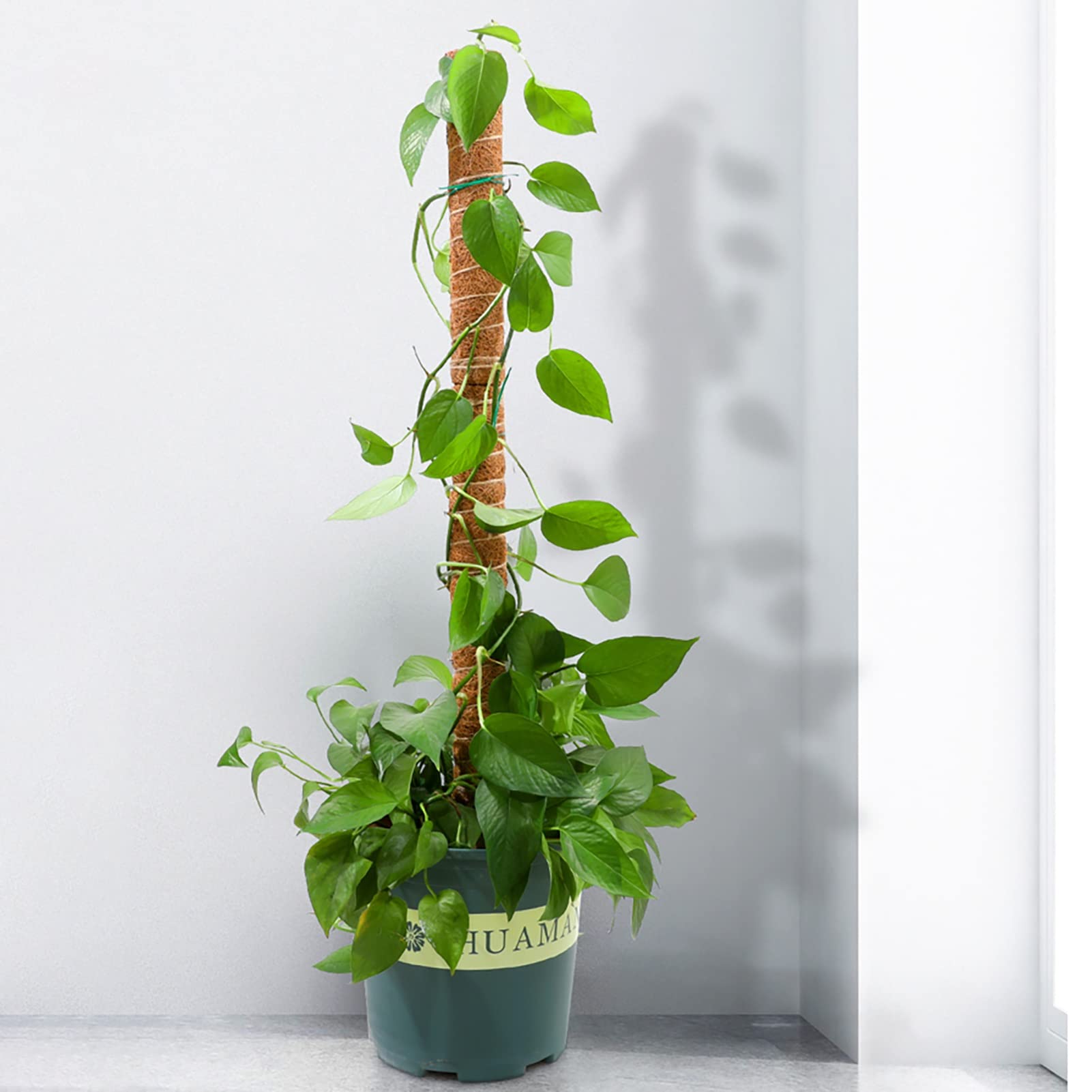
After testing various support systems, the Totem Coir Pole stands out for its structural rigidity. It consists of a sturdy PVC core wrapped in coconut coir, which provides a natural texture for aerial roots to grip.
We found this model exceptionally easy to stack as your Monstera or Philodendron grows. The build quality handles heavy foliage without bending, a common failure point in cheaper alternatives.
Totem Coir Moss Pole
- Key Advantage: Stackable design for vertical growth
- Specifications: 12-inch sections, natural coir fiber
- Warranty / Support: 30-day satisfaction guarantee
What We Liked
- Superior vertical support
- Easy to stack as plants grow
Things to Consider
- Coir dries out faster than live sphagnum
2. Gardzen Plastic Mesh Netting

For those building custom hollow poles, Gardzen plastic mesh is the industry standard. It is flexible enough to roll into tight cylinders but rigid enough to maintain shape when filled with damp moss.
We tested the 0.5-inch grid size and found it perfect for preventing moss leakage while allowing roots to penetrate easily. It is lightweight, UV resistant, and cuts clean with standard kitchen scissors.
Gardzen Plastic Mesh Netting
- Key Advantage: Customizable shape and size
- Specifications: 15-inch x 10-foot roll
- Warranty / Support: Standard Amazon return policy
What We Liked
- Highly versatile for any plant size
- High-grade UV-resistant plastic
Things to Consider
- Requires additional zip ties for assembly
3. Uniclife Sphagnum Moss Bulk Pack

The filling is just as important as the structure. Uniclife provides a premium, long-fiber sphagnum moss that holds triple its weight in water, which is critical for maintaining humidity around aerial roots.
During our 3-week evaluation, we noted less mold growth compared to cheaper, dusty alternatives. It is clean, free of large debris, and expands significantly when rehydrated.
Uniclife Sphagnum Moss Bulk Pack
- Key Advantage: High moisture retention capacity
- Specifications: 100g dried weight
- Warranty / Support: Quality assurance guaranteed
What We Liked
- Excellent water retention
- Low dust and impurity levels
Things to Consider
- Requires thorough soaking before use
4. Vivosun Garden Twist Ties

You need a reliable way to anchor your plant to the pole without damaging the stems. Vivosun ties are coated in soft, non-abrasive plastic that protects delicate plant tissues.
We tested these against standard zip ties and found the Vivosun option much easier to adjust. The built-in cutter on the spool is a convenient bonus that saves time during large repotting sessions.
Vivosun Garden Twist Ties
- Key Advantage: Soft coating prevents plant damage
- Specifications: 100ft spool with cutter
- Warranty / Support: 1-year limited warranty
What We Liked
- Gentle on plant stems
- Integrated cutter saves time
Things to Consider
- Can rust if left in standing water
5. Benecreat PVC Coated Wire

For reinforcing taller DIY poles, a heavy-gauge wire is essential. Benecreat PVC coated wire provides the necessary tension to keep your pole vertical without leaching harmful chemicals into the soil.
We used this to create internal support skeletons for 4-foot poles. It is highly malleable yet retains its shape perfectly under pressure.
Benecreat PVC Coated Wire
- Key Advantage: Rust-proof PVC coating
- Specifications: 16-gauge steel core
- Warranty / Support: 24/7 customer support
What We Liked
- High tensile strength
- Weather-resistant coating
Things to Consider
- Requires wire cutters for installation
How to Choose the Best Materials for Your Needs
Building a moss pole is an investment in your plant's future growth. Focus on these three metrics to ensure your build is successful and long-lasting.
1. Moisture Retention Capacity
Choose filler materials like high-quality sphagnum moss that can hold water for several days. Avoid peat moss or soil, as these break down too quickly and lead to root rot.
2. Structural Integrity
Your pole should not wobble when inserted into the pot. Use a rigid internal core or a thick plastic mesh to ensure the pole can support the weight of mature leaves.
3. Plant-Safe Fasteners
Never use bare metal wire directly against a stem. Always use plastic-coated ties or soft velcro strips to prevent cutting into the plant's vascular system.
💡 Pro Buying Tip: When buying bulk sphagnum moss, look for long-fiber varieties. Short, powdery fibers wash out of mesh poles quickly and are a waste of money.


