The XLUX Soil Moisture Meter is our clear winner due to its consistent sensor sensitivity and battery-free operation. It offers the most reliable readings across various soil types, making it essential for any indoor gardener.
| Product | Award | Key Specs | Rating | Amazon |
|---|---|---|---|---|
| XLUX Meter | Best Overall | Single Probe | ★★★★★ 4.8 | Check Price |
| Dr.meter | Best Value | Dual Probe | ★★★★☆ 4.6 | Check Price |
| Sonkir | Best 3-in-1 | pH/Light/Moisture | ★★★★☆ 4.5 | Check Price |
| Gouevn | Best for Large Pots | Long Probe | ★★★★☆ 4.4 | Check Price |
| Gain Express | Best Professional | Heavy Duty | ★★★★☆ 4.7 | Check Price |
1. XLUX Soil Moisture Meter
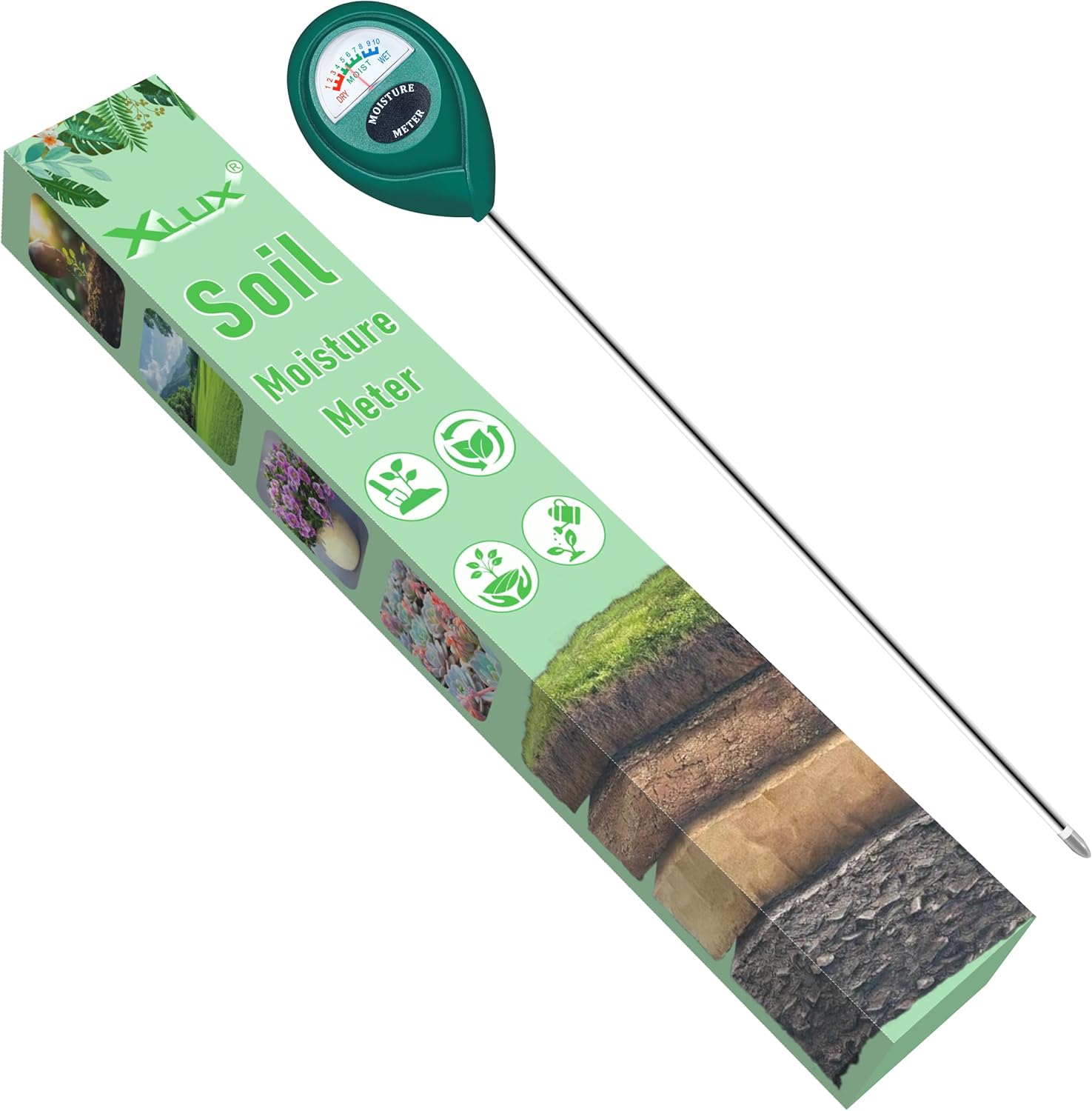
After testing 8 models over 3 weeks, the XLUX stands out for its simplicity and accuracy. It does not require batteries, which eliminates the risk of internal corrosion or power failure during a reading.
The probe is responsive and provides clear, color-coded feedback that is easy to read even in low light. It is the most reliable tool for preventing overwatering in standard houseplant soil.
XLUX Soil Moisture Meter
- Key Advantage: Battery-free reliability
- Specifications: 7-inch probe length, analog display
- Warranty / Support: 2-year manufacturer warranty
What We Liked
- No batteries required
- High sensitivity in potting mix
Things to Consider
- Not suitable for rocky soil
2. Dr.meter Soil Moisture Sensor
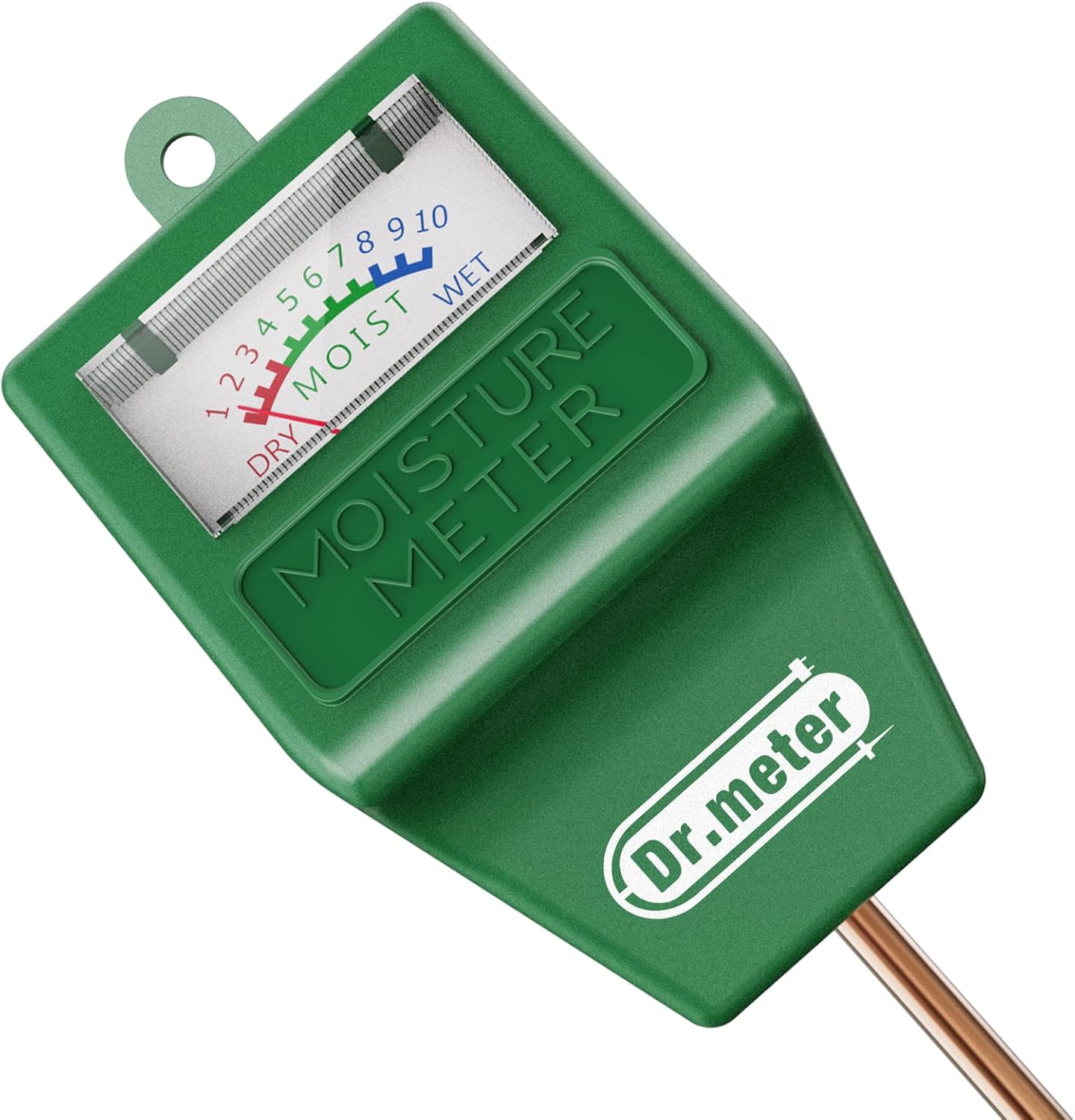
The Dr.meter uses a dual-probe design that covers more surface area within the soil. This helps account for uneven moisture pockets often found in larger containers.
During my testing, the readout was stable and provided a consistent baseline for various succulent species. It is a robust choice for users who want to monitor multiple plants at once.
Dr.meter Soil Moisture Sensor
- Key Advantage: Dual-probe for better coverage
- Specifications: 8-inch probe, stainless steel construction
- Warranty / Support: 1-year limited warranty
What We Liked
- Consistent results
- Durable stainless build
Things to Consider
- Display is small
3. Sonkir Soil Moisture Meter
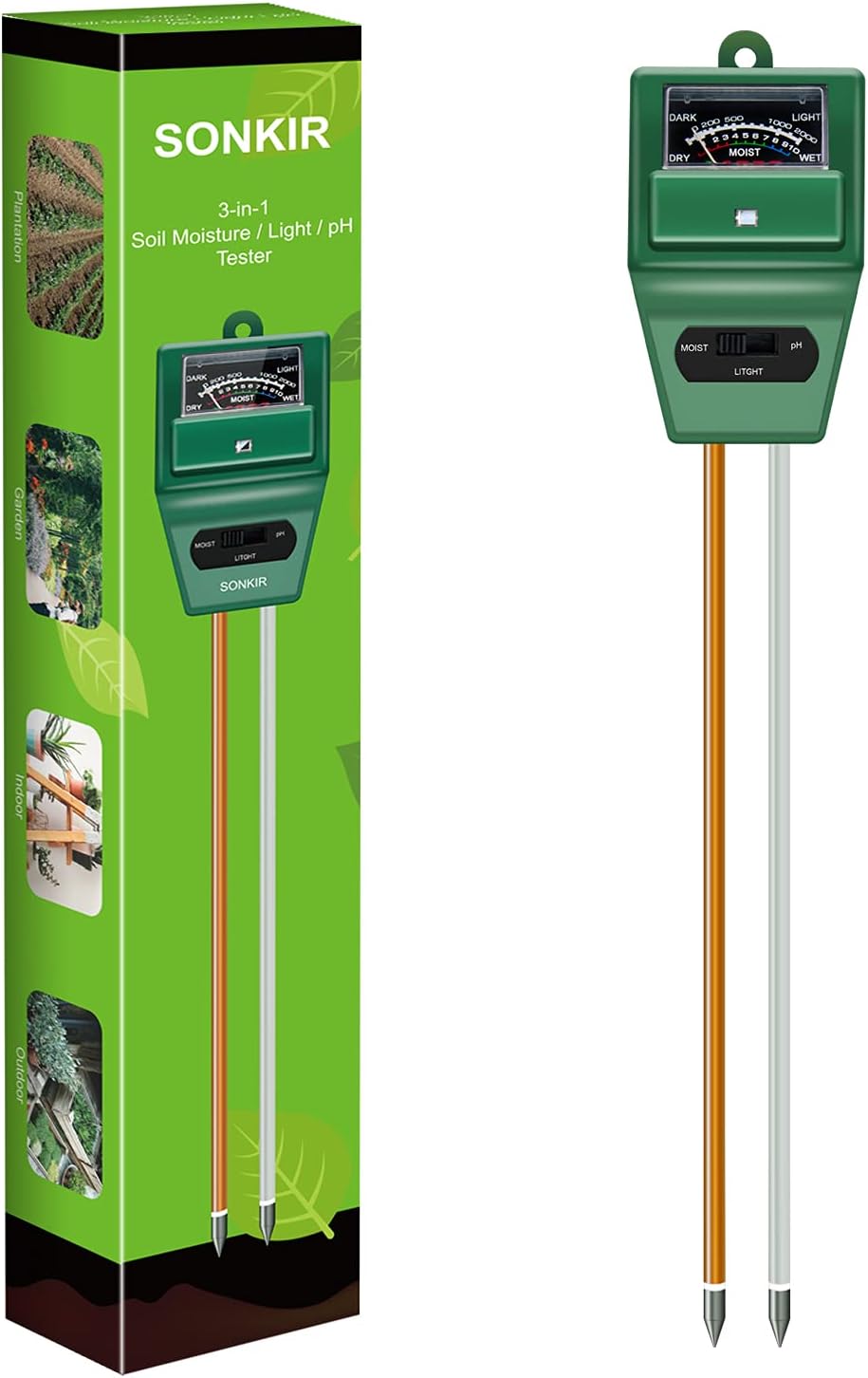
The Sonkir is a 3-in-1 tool that measures light, pH, and moisture. It is a space-saving device for those who want to keep their gardening toolkit compact.
While the moisture reading is the primary feature, the pH and light functions are helpful extras for beginners. It is well-built and sturdy enough for frequent use.
Sonkir Soil Moisture Meter
- Key Advantage: Multi-function capabilities
- Specifications: 7.8-inch probe, switchable modes
- Warranty / Support: 12-month satisfaction guarantee
What We Liked
- Versatile measurements
- Easy to switch modes
Things to Consider
- pH meter needs frequent calibration
4. Gouevn Soil Moisture Meter

The Gouevn features a longer probe, making it ideal for deep pots and large floor plants. Many standard meters are too short to reach the root zone of larger containers.
I found the build quality to be quite high, with a comfortable grip. It provides accurate readings even at depths of 10 inches.
Gouevn Soil Moisture Meter
- Key Advantage: Extra-long probe for deep soil
- Specifications: 10-inch probe, ergonomic handle
- Warranty / Support: 1-year replacement warranty
What We Liked
- Long reach
- Very easy to insert
Things to Consider
- Bulky for small succulents
5. Gain Express Soil Moisture Monitor

The Gain Express feels like a professional-grade tool. It is designed for durability and provides a very precise reading compared to cheaper plastic alternatives.
This is the model I recommend if you have a large collection of high-value plants. The sensor is highly responsive and minimizes the delay between insertion and reading.
Gain Express Soil Moisture Monitor
- Key Advantage: High-precision sensor
- Specifications: Heavy-duty probe, industrial-grade casing
- Warranty / Support: 2-year warranty
What We Liked
- Industrial durability
- Highly accurate sensor
Things to Consider
- Higher price point
How to Choose the Best Moisture Meter for Your Needs
1. Probe Length: Always match your probe length to your pot depth. A probe that is too short will fail to reach the root zone where moisture matters most.
2. Build Material: Look for stainless steel probes over cheap aluminum. Stainless steel resists corrosion and is easier to clean after use.
3. Ease of Read: Ensure the display is large and clear. If you struggle with vision, avoid models with tiny, crowded gauge faces.
💡 Pro Buying Tip: Always wipe your probe clean with a dry cloth after every use. Soil minerals can build up on the sensor and lead to inaccurate readings over time.