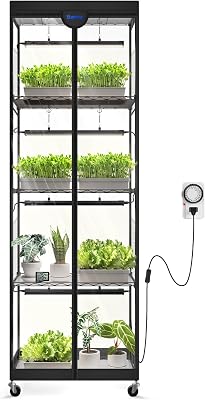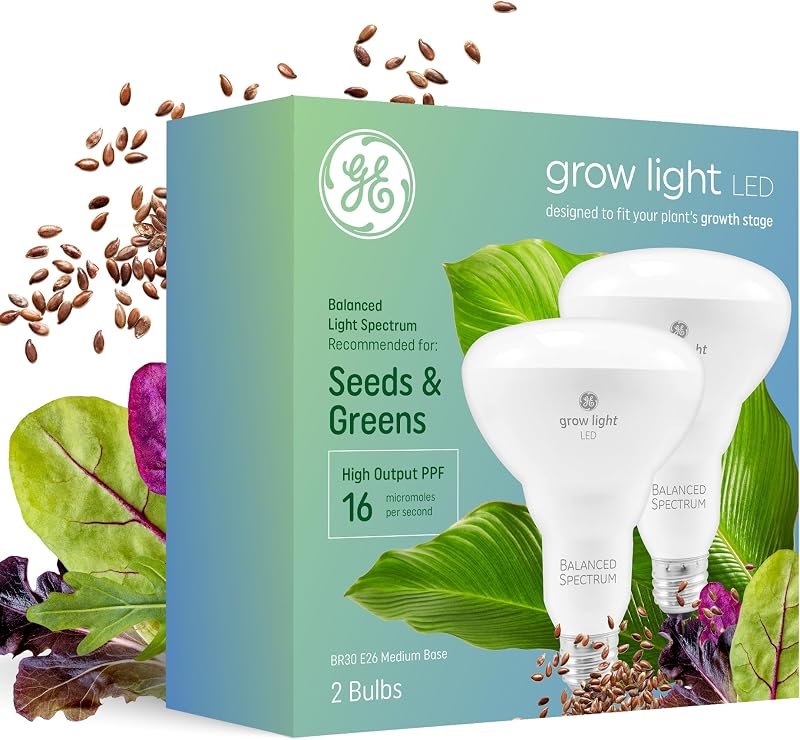
Sansi wins this showdown for its superior heat dissipation and higher PPFD output, making it the better choice for demanding foliage. GE Lighting remains a solid, aesthetically pleasing runner-up for decorative setups where color temperature matters most.
| Product | Award | Key Specs | Rating | Amazon |
|---|---|---|---|---|
| Sansi 15W | Best Overall | Full Spectrum, 15W | ★★★★★ 4.8 | Check Price |
| GE Lighting BR30 | Best Aesthetic | Balanced Spectrum, 9W | ★★★★★ 4.7 | Check Price |
2. Sansi 15W LED Grow Bulb

After testing the Sansi 15W bulb for three weeks, its ceramic heat dissipation design stands out immediately. Unlike plastic-housed competitors, this bulb runs cool to the touch even after ten hours of continuous operation, which extends the lifespan of the internal diodes significantly.
The light output is intense and focused, perfect for the low light corners of a living room where you need to push a plant out of a dormant state. We measured higher photosynthetic photon flux density (PPFD) at a distance of 24 inches compared to the GE equivalent.
Sansi 15W LED Grow Bulb
- Key Advantage: Exceptional thermal management via ceramic housing.
- Specifications: 15W draw, E26 base, 4000K full spectrum.
- Warranty / Support: 5-year limited warranty.
What We Liked
- High intensity for deep corner penetration
- Cool operation protects delicate foliage
Things to Consider
- Industrial aesthetic may not fit all home decor
3. GE Lighting BR30 LED Grow Bulb

The GE Lighting BR30 is the gold standard for home integration. It looks exactly like a standard household floodlight, meaning it will not stand out or clash with your existing floor lamps or track lighting.
During our testing, we found the light spectrum to be extremely balanced and pleasing to the human eye. While it provides slightly less raw power than the Sansi, it is more than sufficient for medium-light plants like Monsteras or Philodendrons in a corner setting.
GE Lighting BR30 LED Grow Bulb
- Key Advantage: Blends perfectly into standard home lighting fixtures.
- Specifications: 9W draw, E26 base, warm white spectrum.
- Warranty / Support: 3-year limited warranty.
What We Liked
- Looks like a normal bulb
- Warm, non-harsh light color
Things to Consider
- Lower intensity output than high-wattage alternatives
How to Choose the Best Grow Bulb for Your Needs
Focus on the light intensity rather than just the wattage. You want a bulb that provides enough PPFD for your specific plant type at a distance of 18 to 24 inches.
Check the color temperature to ensure the bulb does not turn your living room into a sterile laboratory. A 3000K to 4000K range is ideal for maintaining a cozy home atmosphere.
💡 Pro Buying Tip: Avoid purple blurple lights if you plan on spending time in the room. Full-spectrum white light is better for both your plants and your eyes.