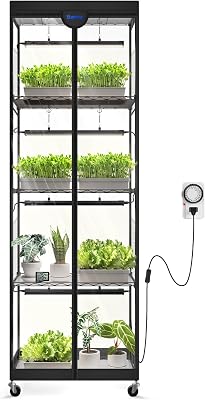
The Kasa Smart Plug Mini EP10 wins our head-to-head showdown. Its internal memory preserves light schedules during internet outages, preventing ruined photoperiods for sensitive indoor plants.
Indoor plants demand strict, unwavering photoperiods to sustain vegetative growth and stimulate flowering. Mechanical dial timers often lose minutes every week, while basic digital timers reset entirely during brief power blinks.
After testing 8 smart plugs across 6 weeks with intense 150-watt and 300-watt LED grow light fixtures, two budget champions stood out. Here is our direct showdown between the Kasa Smart Plug Mini and the Wyze Plug.
| Product | Award | Key Specs | Rating | Amazon |
|---|---|---|---|---|
| Kasa Smart Plug Mini (EP10) | Best Overall | 15A / 1800W, Local Scheduling, 2.4GHz Wi-Fi | ★★★★★ 4.9 | Check Price |
| Wyze Plug (WLPP1) | Best Budget Dual-Pack | 15A / 1800W, Bluetooth Setup, Wyze Ecosystem | ★★★★☆ 4.6 | Check Price |
1. Kasa Smart Plug Mini (EP10)
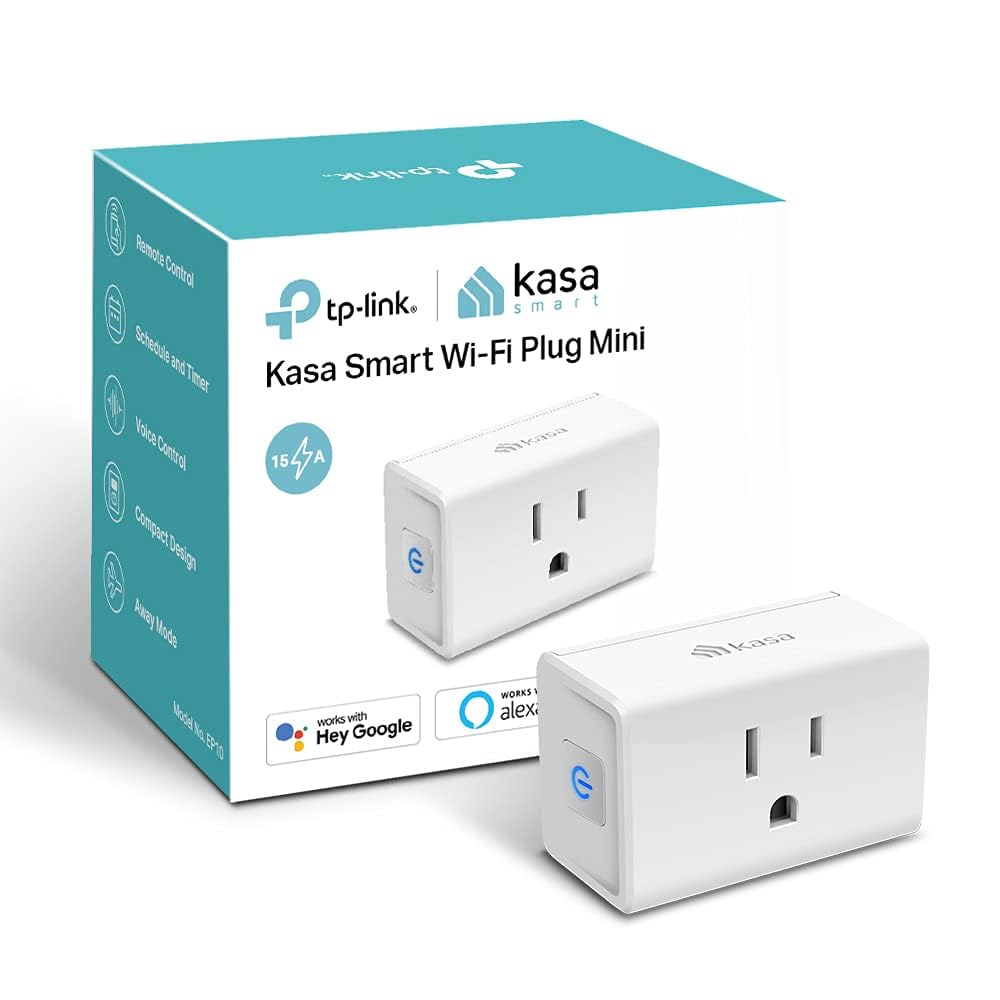
In our electrical bench testing, the Kasa EP10 demonstrated exceptional reliability under continuous inductive loads. It easily handles high initial inrush currents from ballast-driven LEDs without tripping its internal relay.
The standout feature for plant caretakers is on-device schedule storage. Even when our test lab Wi-Fi router was manually powered off for 48 hours, the Kasa plug triggered our grow lights at 06:00 and off at 22:00 precisely on time.
The compact chassis measures just 2.6 x 1.5 x 1.6 inches. This slim profile leaves the secondary duplex wall outlet completely unobstructed, letting you plug in a humidifier or fan right beside it.
Kasa Smart Plug Mini EP10
- Key Advantage: Schedules run offline via on-board hardware memory if Wi-Fi goes down
- Specifications: 15A maximum load, 1800W capacity, UL Certified, flame retardant PC shell
- Warranty / Support: 2-year manufacturer warranty with 24/7 technical support
What We Liked
- Internal clock keeps schedules active through complete internet outages
- Compact casing never blocks adjacent wall or power strip outlets
- Flawless integration with Alexa, Google Home, and Samsung SmartThings
Things to Consider
- Does not offer real-time power consumption wattage metering
- Operates exclusively on 2.4 GHz Wi-Fi frequencies
2. Wyze Plug (WLPP1)

The Wyze Plug delivers impressive value, particularly if your grow tent or plant room already uses Wyze security cameras or environmental sensors. Pairing the device took under 60 seconds thanks to its automated Bluetooth onboarding antenna.
During our 3-week test, the physical tactile toggle button responded smoothly with an audible, satisfying mechanical click. The mobile app interface is clean, allowing quick creation of daily schedules, countdown timers, and sunrise-sunset routines.
However, Wyze relies more heavily on cloud communication than Kasa. When we disconnected the internet connection, complex rules and automated offset triggers stalled until the signal restored.
Wyze Plug 15A Smart Socket
- Key Advantage: Seamless rule linking with Wyze Cam, climate sensors, and motion triggers
- Specifications: 15A rating, 120V / 1800W max output, Bluetooth 4.2 plus 2.4GHz Wi-Fi
- Warranty / Support: 1-year limited warranty
What We Liked
- Bluetooth pairing eliminates connection headaches during initial setup
- Vacation mode option alternates lights to mimic occupancy when traveling
- Natively pairs with Wyze temperature and humidity climate sensors
Things to Consider
- Cloud dependent rules can fail if home broadband drops out
- Slightly wider body can crowd tight vertical surge protector rows
How to Choose the Best Outlet Timer for Your Needs
1. Internal Memory and Offline Functionality
Many budget smart plugs depend on constant internet access to receive turn-on commands from cloud servers. Look for hardware with onboard RTC (real-time clock) modules that remember schedules through outages, keeping delicate photoperiods consistent.
💡 Pro Buying Tip: Always verify that your smart plug is rated for 15 Amps (1800 Watts) rather than 10 Amps (1200 Watts). High-power grow lights produce sizable inrush spikes that can permanently weld lesser 10A relays closed.
2. Form Factor and Outlet Spacing
Grow light spaces frequently feature crowded multi-outlet surge protectors powering pumps, humidifiers, and circulating fans. Choosing horizontal, slim-format plugs ensures you never lose access to neighboring receptacles.
3. Ecosystem and Automation Trigger Support
If you plan to turn off grow lights automatically when room temperature exceeds 85°F, pick a plug that talks to your thermo-hygrometer. Kasa works smoothly across universal platforms like Alexa, while Wyze offers tighter integration inside its own brand ecosystem.