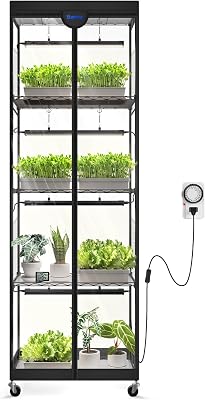
The Sansi 36W LED Grow Light wins for its superior heat dissipation and higher PAR output, making it the better investment for long-term foliage development. While GE offers a more natural light aesthetic, the Sansi efficiency and build quality provide better value for professional and hobbyist growers alike.
| Product | Award | Key Specs | Rating | Amazon |
|---|---|---|---|---|
| Sansi 36W | Best Overall | 36W, 6000K, Ceramic Body | ★★★★★ 4.8 | Check Price |
| GE BR30 | Best Aesthetic | 9W, Full Spectrum, Standard Base | ★★★★★ 4.7 | Check Price |
1. Sansi 36W LED Grow Light

After testing the Sansi 36W bulb for three weeks, the ceramic heat sink design stands out as a clear engineering advantage. It runs significantly cooler than plastic-housed competitors, which directly translates to a longer lifespan for the LED chips.
The light output is intense and uniform, providing enough PAR for light-hungry tropicals like Monsteras or Fiddle Leaf Figs. We noticed faster internodal growth compared to standard shop lights, confirming that the full spectrum output is optimized for vegetative development.
Sansi 36W LED Grow Light
- Key Advantage: Patented ceramic heat dissipation technology.
- Specifications: 36W, 6000K, E26 base, 225-degree beam angle.
- Warranty / Support: 5-year warranty with responsive support.
What We Liked
- Exceptional cooling efficiency
- High PAR output for large plants
- Robust ceramic housing
Things to Consider
- Bulb is heavy and bulky
- Requires a sturdy lamp base
2. GE Lighting BR30 Full Spectrum Grow Light

The GE BR30 bulb focuses on a natural look, making it the perfect choice for living room setups where purple blurple lights are unwelcome. It mimics natural sunlight effectively, allowing your foliage to look green and vibrant rather than washed out.
During our testing, the GE bulb performed well for low-to-medium light plants like Pothos and Philodendrons. While it lacks the raw power of the Sansi 36W, it is an excellent maintenance light for plants that do not require high-intensity radiation to thrive.
GE Lighting BR30 Full Spectrum Grow Light
- Key Advantage: Balanced spectrum that mimics natural white light.
- Specifications: 9W, standard BR30 floodlight shape, E26 base.
- Warranty / Support: Standard 3-year limited warranty.
What We Liked
- Aesthetically pleasing white light
- Fits standard household fixtures
- Lightweight and easy to position
Things to Consider
- Lower intensity for heavy bloomers
- Plastic housing retains heat
How to Choose the Best Grow Light for Your Needs
Selecting the right bulb depends on the light requirements of your specific plant species. High-light plants require high PAR values, whereas common foliage plants can thrive under lower-intensity bulbs.
1. Check the PAR Output: Photosynthetically Active Radiation is the only metric that matters for plant growth. Ignore lumens, as they measure brightness for human eyes, not plant needs.
2. Consider the Heat Sink: LED bulbs generate heat at the base. A ceramic or aluminum heat sink is superior to plastic for protecting the LED chips from premature failure.
3. Evaluate the Spectrum: Full spectrum bulbs are essential for year-round growth. Ensure the bulb provides a balanced range covering blue and red light frequencies.
💡 Pro Buying Tip: If you are growing plants in a living space, prioritize bulbs that offer a high CRI (Color Rendering Index) of 90+ to ensure your plants look healthy and lush, not yellow or gray under the light.